
Government Modernization Starts with Caring about Others
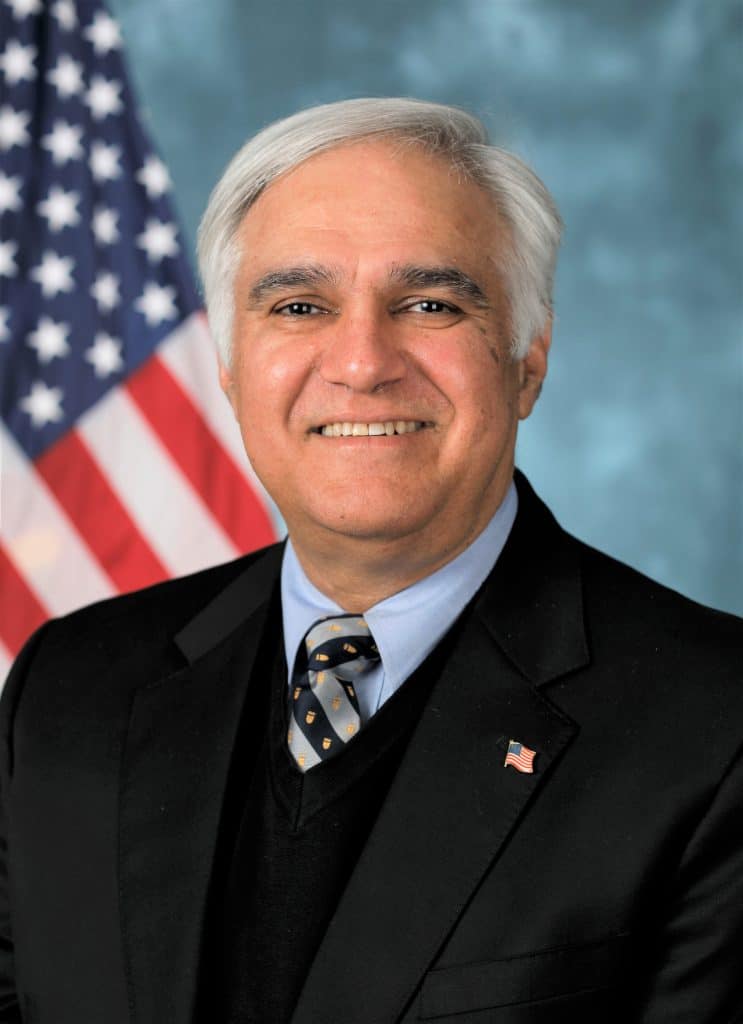
Sonny doesn’t shy away from challenges.
Today, Sanjeev “Sonny” Bhagowalia serves as Assistant Commissioner and Chief Information Officer (CIO) for the United States (U.S.) Custom and Border Protection (CBP) – the largest law enforcement agency in the U.S. and the largest component within the Department of Homeland Security. In today’s domestic and global environment, one could argue that CBP is always on the frontlines of national security, border security, and economic security at the speed of a 24/7/365 mission. Not for the faint of heart, in any case.
Before July 2011 when Sonny became the very first CIO for Hawai’i state government, he’d already compiled an impressive track record of challenging roles in U.S. federal government. Assistant director at the FBI, CIO of the Bureau of Indian Affairs, CIO of the Department of the Interior, GSA Deputy associate administrator with the Office of Citizen Services and Innovative Technologies helping run White House programs for the Federal CIO across federal government, and as a Senior Principal Engineer in the Boeing company and member of the Boeing’s prestigious technical excellence fellowship program.
But an unsolicited email opened a window into an intriguing new challenge outside the Beltway.
“I was minding my own business working in federal government and got an email on behalf of the Governor. It said if you’d like to be CIO of the State of Hawai’i, just click the PDF below. At first, I thought it was spam or phishing and of course, I ignored it,” Sonny recalls. “I then received a call, explaining that there was a big puka in IT in Hawai‘i state government, that Hawai‘i really needed to find a CIO, and they wanted the best CIO they could possibly find and your name is already submitted – please send your Curricular Vitae.” Sonny got approval from GSA government counsel, submitted his quals and soon thereafter headed to Honolulu for a panel interview as a finalist. “Next thing I know I’m in the Governor’s (Neil Abercrombie) office. We talked about India (where I’m originally from), my Industry and Federal career, and the Governor said I’ve already chosen you and offered me the job,” Sonny said. “I asked for time to think about it and when I went back to Virginia and saw first a double rainbow in the sky and then a large turtle (Honu) walking across our backyard, I knew it was a sign to take the job in Hawai’i!” So, Sonny accepted the role as the first CIO, even while making the difficult decision to leave his family back in Virginia so as not to disrupt his children’s education. “I felt a certain sense and spirit of calling,” he recalls.
Lured by the Spirit of Aloha
A hallmark of Sonny’s career is his ability to embrace and unify different cultures. Being of northern Indian descent, and having grown up in India until age 18 and going to American Jesuit/Catholic schools in India, he grew to appreciate and respect different heritages, communities, and social practices. This helped him when he was with the Bureau of Indians Affairs, working with Native American tribes who would tell him they could look into his eyes and see his soul and know that he truly cared. He saw the same opportunity for native Hawaiians and residents of Hawai’i. With Sonny, there is no uneasiness about feeling out of his league – only a sense of challenge, opportunity and service.
Sonny said it was the aloha spirit that attracted him to the Hawai’i CIO position. The warm welcome he felt from those whom he met aligned perfectly with his values, as his parents had taught him to respect all cultures. Sonny said he has always considered himself to be a public servant, called to serve. In Hawai‘i, he felt an immediate affinity with Native Hawaiians and residents of the islands.
There was also something about the potential of working in state government that spoke to him.
“Working in federal government, it is such a large scale, one can feel more removed from the customer base sometimes. In Hawai‘i, people let you know directly and immediately what they want. Ergo, I learnt quickly, first, you have to give the people what they want, and after that, you can do what the HI leadership wanted.”
Getting Started
“The first quality you need as a CIO is you have to care,” Sonny says. And a key aspect of caring is a commitment to candor, even if the truth Is hard to swallow.
Those principles guided his steps while analyzing the pukas in the state government’s fragmented, antiquated IT landscape. It was important to listen to state employees in one-on-one meetings, and to give them a voice. The objective was to conduct a thorough audit to get the full picture of what it would take to move Hawai‘i forward.
Having extensive government experience, Sonny knew it was important to serve with respect and humility and to know the boundaries of what could be achieved.
“I would ask people, ‘What is feasible?’” he said. “What are some adjustments we can make based on what we actually have to work with?”
The Plan
In late 2012, Sonny’s efforts to analyze and assess that state of IT in Hawai’i culminated in the Business and Information Technology/Information Resource Management (IT/IRM) Transformation Plan. It was a plan of breathtaking scope, a 1,400-page document that aimed to streamline business processes across 18 departments, consolidate hundreds of legacy systems, and make enterprise-wide improvements in infrastructure, including the state network, cybersecurity, the central data center, and broadband expansion. It’s tagline was “Transforming Government at the Speed of Life,” promising citizens the ability to conduct business “on-line” rather than waiting “in-line.”
Key Findings
Sonny’s evaluation pinpointed three main challenges:
- Revamp business processes
There was a need to reengineer inefficient processes. There were excessive checks and balances that slowed things down without adding real value. There were not enough online services to provide direct access for Hawai’i citizens and improve efficiency for state employees. - Need for more IT investment
At the time, IT made up only 1.4% of the state budget. Sonny said that, ideally, between 5 to 10 percent of the state budget should be for IT, and ideally, 10% of the total IT budget should be for cybersecurity. He noted that there were 743 legacy systems, some of which were 30 to 40 years old. The biggest surprise for Sonny? The data center was – and still is – located below sea level and close to the ocean in the basement of the Kalanimoku Building, the headquarters of the Department of Accounting and General Services and needed to be relocated to higher ground with added resiliency and survivability - Improved IT governance
There was a clear need for someone to coordinate all the disparate, decentralized, and different aspects of IT across state government to reduce silos, standardize tools and processes where possible, and generate economies of scale.
The IT/IRM Plan was an important achievement, but it was also sobering news.
Hawai‘i is about 30 to 35 years behind the rest of the nation,” Sonny remembers telling Governor Abercrombie at that time. “It will require a 12-year plan in seven incremental phases and at least $100 million to bring everything up to speed. It will require bringing in experts and obtaining assistance from the federal government and industry, and continuous leadership support.”
Quick Wins
While the news wasn’t entirely surprising, it was clearly daunting to many in the state. The Governor agreed with Sonny’s suggestion to concurrently create some early wins to show progress in IT transformation. Therefore, Sonny came up with a Top 10 list of projects for quick delivery to prove the transformation envisioned in the plan.
Big changes always invite a healthy level of skepticism and apprehension. Those proposing the changes are viewed as outsiders or wild renegades, especially among those who are risk averse and those comfortable with the status quo. Sonny said he encountered these reactions as the state CIO but began to change people’s attitudes toward change by demonstrating how to “plan the work, work the plan.”
One of the early wins in 2012-2013 was dramatic improvements made in tax processing. This included significant upticks in the speed and volume of processing tax returns, faster check deposits, and reduction in paperwork.
Another win was the creation of the Hawaii Open Data Portal, which increased government transparency by making state datasets available to the public and earned the state a national award for transparency.
In working with Hawai‘i employees, Sonny said he came to realize that Hawai‘i state government has the potential to have a world-class IT operation. There are, in his own words, “plenty of akamai people” in Hawai‘i who simply need to be empowered to cut through bureaucracy to execute and perform their jobs with an agile risk-reward structure and culture.
Sonny also gained allies in the legislature. Amongst many, a couple who stand out in his mind are former state Senator Carol Fukunaga and former state Senator David Ige before he was elected Governor. Sonny said these legislators were extremely helpful and there was strong mutual respect between them.
Accolades and Lasting Contributions
After laying the foundation for state government IT and three years of commuting between work in Hawai‘i and spending time with his wife and children in Washington, D.C., Sonny left the state in good hands and returned back to the federal government as CIO of the U.S. Treasury Department for three years, before his current role at CBP for the past eight years.
“Over the past three years, Sonny has helped Hawaii leapfrog from the back of the pack in technology and cybersecurity to the front of the line and we are now one of the best in the country,” Governor Abercrombie said in a statement to StateScoop, an online publication that brings together top leaders from across government, academia and the tech industry to discuss ways technology can improve government. “Under Sonny’s leadership, our government transformation program has garnered an unprecedented 25 national awards, including his 2014 Enterprise Architecture (EA) Hall of Fame Award for Individual Leadership in EA Practice, Promotion and Professionalization.”
Hawai‘i also was also honored with a “Best of the Web” State Portal award from the Center for Digital Government (CDG) for Hawaii.gov. and Sonny was named “Government Innovator of the Year” by the Government Technology Research Alliance for facilitating the transformation.
StateScoop highlighted a recap of Sonny’s accomplishments as Hawai’i CIO. The article noted that he successfully:
- Aligned business and IT through four key programs (enterprise resource planning, tax, health IT and business process re-engineering).
- Strengthened the state’s critical security and technology infrastructure through four key programs (consolidated infrastructure, enterprise shared services, enterprise security/privacy and the Hawaii Broadband Initiative).
- Implemented transparency and accountability through two key programs (open government and IT governance).
“We have the right plans and have completed many projects, thanks to his invaluable leadership and the cooperation of the extended technology and cybersecurity ohana,” Governor Abercrombie added. “Because of him, we are now on the right track, charting and navigating the course to success for the future of Hawaii and its citizens.”
Before he left, Sonny also published a comprehensive cybersecurity assessment and report on how to establish Hawai’i as a strategic cybersecurity hub and center of excellence, leveraging his experience working with multiple levels of U.S. government, industry, and the law enforcement and intelligence communities.
After his tour of duty in Hawai’i, Sonny recalled his experience here as the “toughest transformation, but the most satisfying.” Sonny maintains that that “bones of the plan” are still good and viable for Hawai‘i’s future and that subsequent leaders should keep updating it, and keep “striving for the summit (Kulia i ka nu’u).”
Mahalo, Sonny!